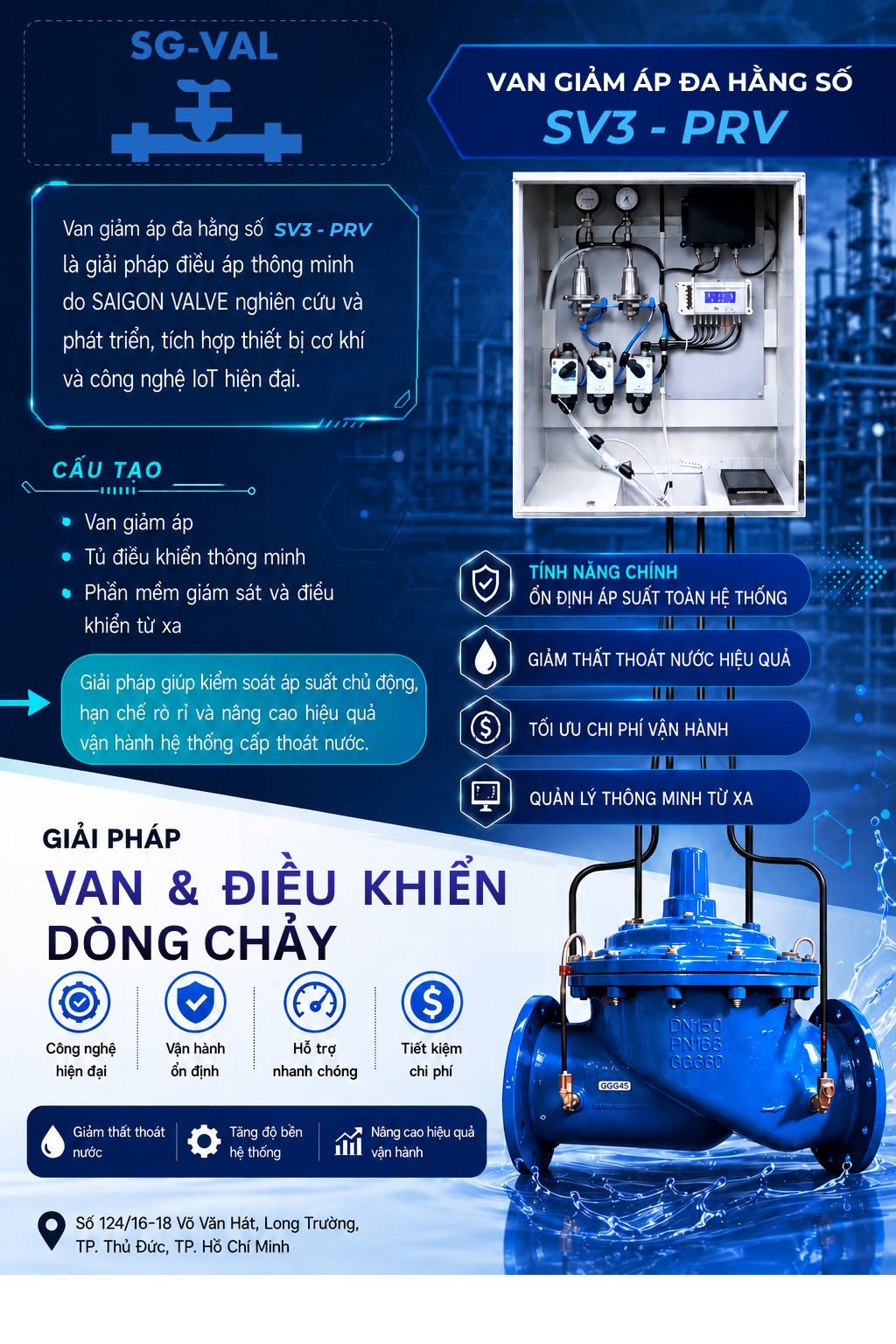
IOT IN THE WATER INDUSTRY: SMART WATER SUPPLY MANAGEMENT SOLUTIONS FOR THE DIGITAL AGE
What-Is-IoT-in-the-Water-Industry
I. WHAT IS IoT IN THE WATER INDUSTRY?
Amid climate change, rapid urbanization, and the growing demand for clean water, water utilities are facing significant challenges, including water loss (Non-Revenue Water - NRW), high operating costs, difficulties in maintaining water quality, and increasing pressure to improve service reliability. To address these challenges, the adoption of the Internet of Things (IoT) has become a key driver of digital transformation in the water industry.
IoT in the water industry (Internet of Things for Water Management) refers to an integrated system that connects intelligent devices such as sensors, flow meters, pressure sensors, online water quality monitoring instruments, Data Loggers, PLCs, RTUs, and smart control valves through communication networks. These connected devices continuously collect, transmit, analyze, and process operational data in real time.
Unlike conventional water management systems that rely on routine on-site inspections and manual data collection, IoT enables operators to monitor and manage the entire water supply or wastewater network from a single centralized platform. Operational data is continuously updated, allowing abnormal conditions to be detected immediately, generating real-time alerts and supporting faster, data-driven decision-making.
Today, IoT serves as the technological foundation of Smart Water systems and is widely implemented by water utilities, industrial parks, smart cities, manufacturing facilities, and water and wastewater treatment plants worldwide. By integrating automation, real-time monitoring, and intelligent analytics, IoT significantly enhances operational efficiency while reducing maintenance costs and improving service quality.
II. WHY DOES THE WATER INDUSTRY NEED IoT?
For many years, most water supply systems have been managed using conventional operating methods. Field personnel were required to conduct routine inspections, manually record operational data, and respond to issues only after they had already occurred. This reactive approach creates several operational challenges, including:
Difficulty detecting pipeline leaks at an early stage.
Inability to monitor pressure and flow rates in real time.
High labor requirements for routine inspections and maintenance.
Dispersed operational data, making analysis and forecasting difficult.
Slow response to incidents that affect customers and system performance.
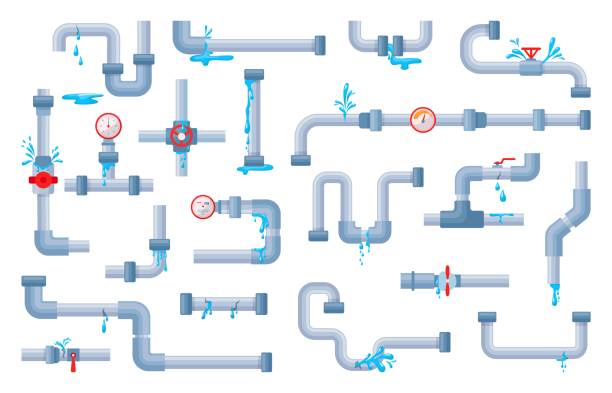
IoT transforms this traditional approach into a proactive and data-driven management model. By continuously collecting operational data from sensors and field devices, water utilities can monitor system performance 24/7, identify abnormalities before they escalate into major failures, optimize maintenance schedules, and improve the overall reliability and efficiency of water distribution networks.
III. HOW DOES AN IoT SYSTEM FOR THE WATER INDUSTRY WORK?
A comprehensive IoT system for water management consists of four key layers that work together to form a fully integrated monitoring, communication, and control architecture. Each layer plays a vital role in ensuring reliable data collection, intelligent analysis, and automated system operation.
1. Field Device Layer
The Field Device Layer is the foundation of the entire IoT system. It comprises all measurement instruments and sensors installed directly throughout the water supply or wastewater network to continuously monitor operating conditions.
Typical field devices include:
Electromagnetic Flow Meters
Ultrasonic Flow Meters
Pressure Sensors
Water Level Sensors
Temperature Sensors
pH Sensors
Residual Chlorine Sensors
Dissolved Oxygen (DO) Sensors
Chemical Oxygen Demand (COD) Sensors
Turbidity Sensors
Online Water Quality Monitoring Instruments
These devices continuously measure hydraulic and water quality parameters, generating real-time operational data that is transmitted to the central data acquisition unit for further processing and analysis.
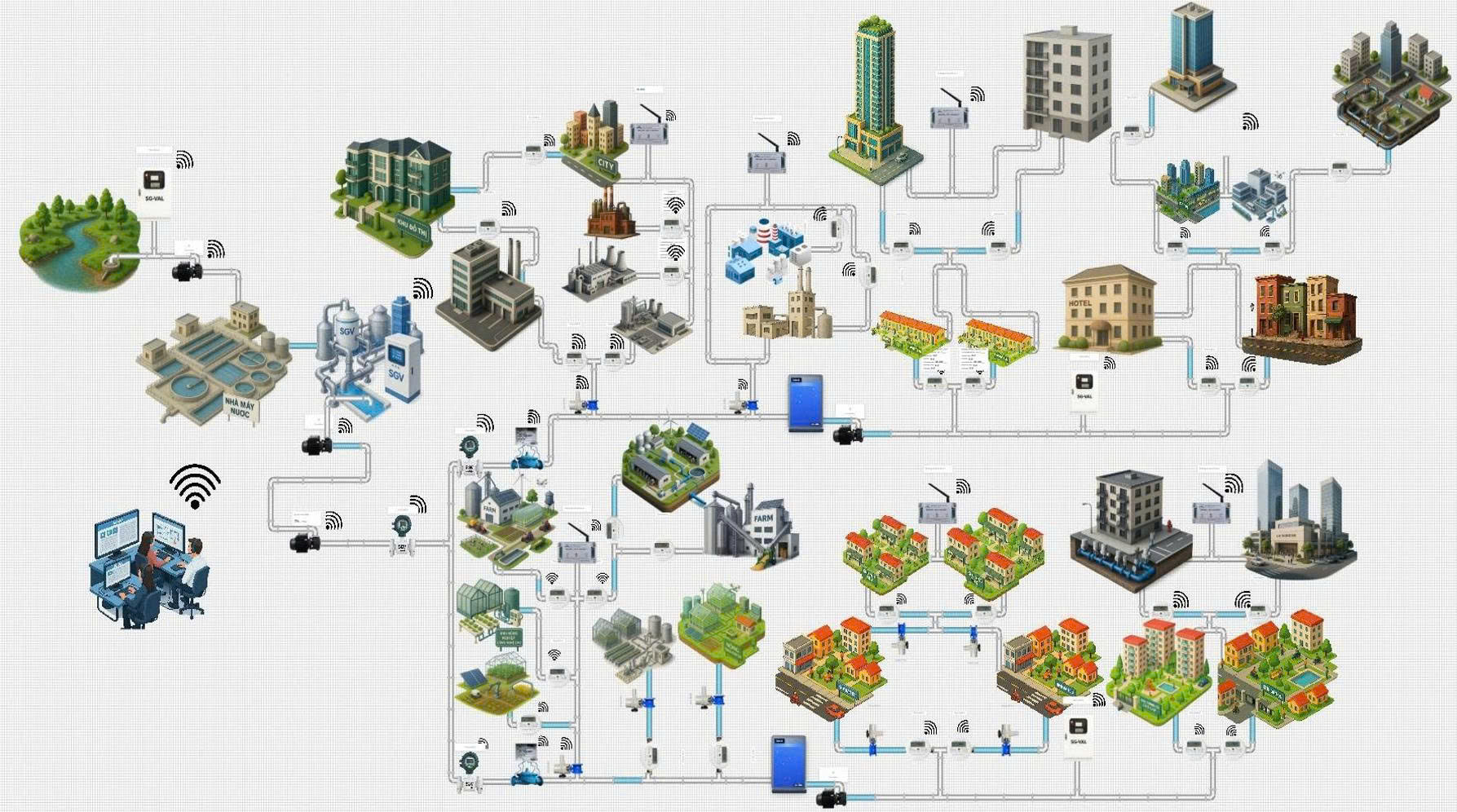
Field Device System
The field device system serves as the primary source of operational data within the IoT architecture. Depending on the project requirements, these devices can be installed at strategic locations such as:
Water treatment plants
Pumping stations
Distribution pipelines
Pressure management zones (DMA)
Water storage reservoirs
Industrial facilities
Wastewater treatment plants
Online water quality monitoring stations
Designed to operate continuously under harsh environmental conditions, field devices provide highly accurate and reliable measurements that form the basis for intelligent monitoring, predictive maintenance, and automated control throughout the entire water management system.
2. Data Acquisition and Communication Layer
Once data is generated by the field sensors, a Data Logger or Remote Terminal Unit (RTU) collects, stores, and transmits the information to the central monitoring system.
Its primary functions include:
Collecting analog and digital signals.
Storing data locally to prevent data loss during communication interruptions.
Transmitting operational data securely to the central server or cloud platform.
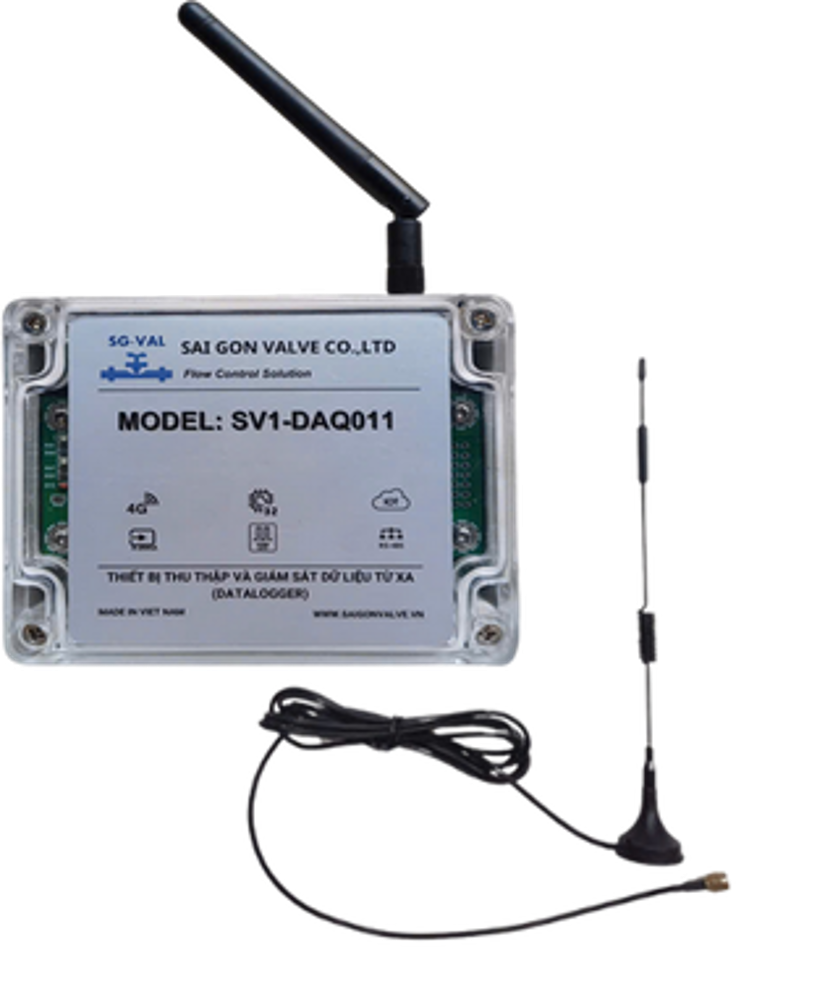
Data Logger Developed by Sai Gon Valve
Sai Gon Valve's SV1-DAQ Data Logger is designed for continuous data acquisition and remote monitoring applications in water supply, wastewater treatment, environmental monitoring, and industrial automation systems. It supports multiple communication protocols and interfaces, enabling seamless integration with a wide range of field instruments and SCADA platforms.
Common Communication Technologies
An IoT water management system can utilize various communication technologies depending on project requirements, including:
Ethernet
4G / 5G Cellular Networks
NB-IoT (Narrowband Internet of Things)
LoRaWAN
Wi-Fi
RS485 / Modbus RTU
MQTT
OPC UA
Selecting the appropriate communication technology depends on several factors, including transmission distance, data bandwidth requirements, power consumption, network availability, and environmental conditions at the installation site.
3. Data Processing Layer
After the operational data reaches the control center or cloud platform, it undergoes multiple processing stages to transform raw information into actionable insights.
Typical processing functions include:
Data storage
Data normalization
Data analysis
Threshold comparison
Trend visualization through charts and dashboards
Anomaly detection
Trend forecasting
The processed data is displayed through SCADA systems or web-based dashboards, enabling operators to monitor the status of the entire water network in real time.
Many advanced IoT platforms also incorporate Artificial Intelligence (AI) and Machine Learning (ML) algorithms to identify potential pipeline leaks, forecast water demand, optimize pressure management, and support predictive maintenance strategies. These intelligent capabilities help utilities reduce operational costs while improving system reliability and service quality.
4. Control Layer
The Control Layer is responsible for executing automated responses or operator commands based on real-time data analysis.
When abnormal operating conditions are detected, the system can automatically or remotely perform actions such as:
Opening or closing control valves.
Starting or stopping pumps.
Adjusting network pressure.
Sending instant notifications via Email, SMS, or mobile applications.
Triggering predefined automatic operating sequences.
By integrating monitoring, analytics, and automated control into a single platform, IoT significantly shortens incident response time, minimizes service interruptions, improves operational efficiency, and enhances the overall reliability of water supply and wastewater management systems.
IV. KEY BENEFITS OF IoT IN THE WATER INDUSTRY
Reducing Non-Revenue Water (NRW)
Water loss, commonly referred to as Non-Revenue Water (NRW), is one of the most critical challenges faced by water utilities worldwide. IoT technology enables continuous monitoring of flow rate, pressure, and other hydraulic parameters across multiple locations within the distribution network, allowing operators to quickly identify leaks, pipe bursts, or abnormal operating conditions.
Early detection significantly reduces water losses, lowers production and operating costs, minimizes infrastructure damage, and improves the overall efficiency and reliability of the water supply system.
Real-Time System Monitoring
An IoT platform provides 24/7 real-time monitoring through an intuitive web-based dashboard or mobile application.
Operators can continuously monitor:
Flow rate
Water pressure
Water level
Water quality
Valve status
Pump status
Energy consumption
System alarms and event notifications
Since all operational data is available remotely, engineers and operators no longer need to perform routine on-site inspections. The entire system can be monitored anytime and anywhere using a computer, tablet, or smartphone.
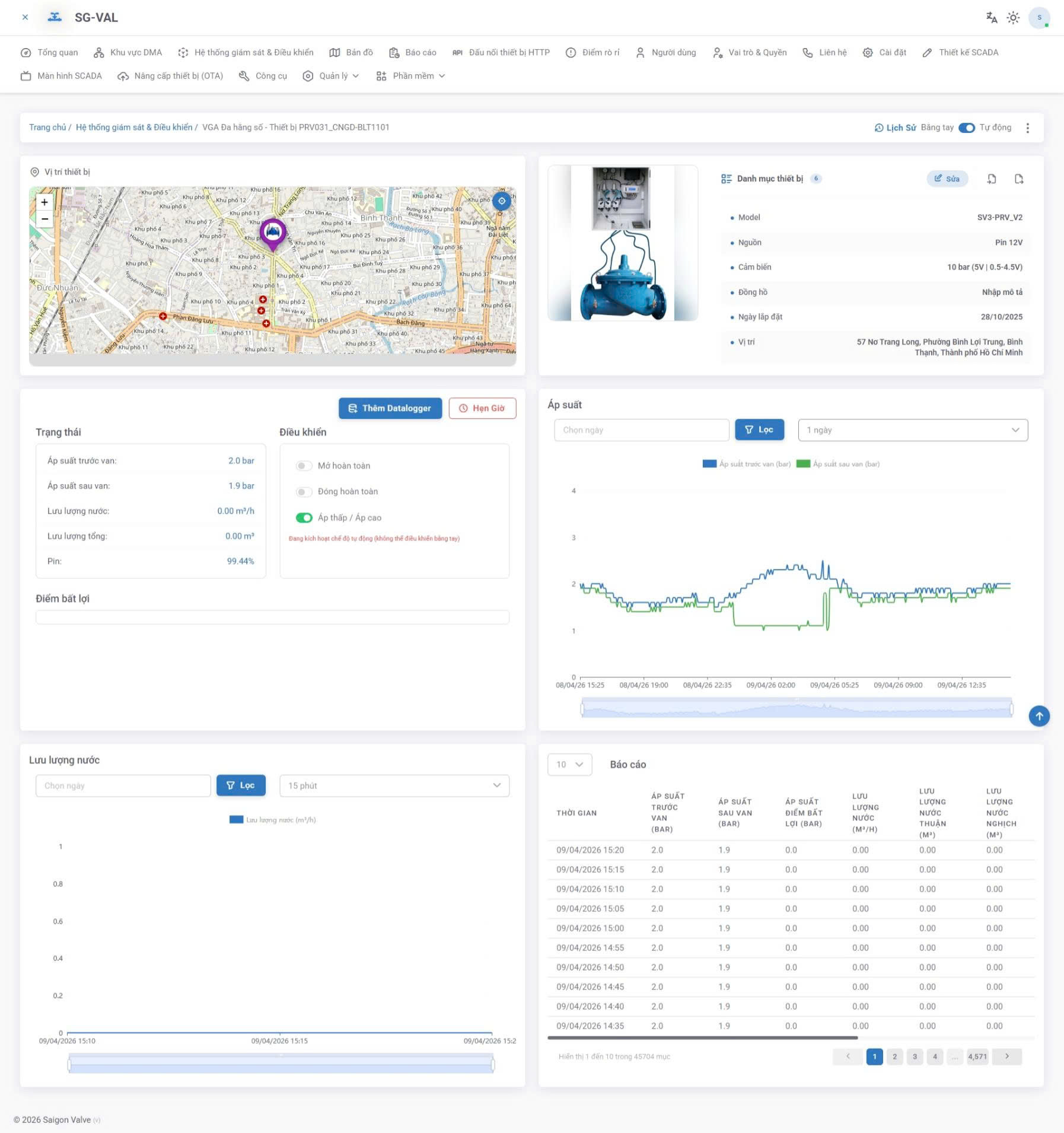
IoT Software Platform Designed and Developed by Sai Gon Valve
Sai Gon Valve provides a comprehensive IoT software platform featuring intuitive dashboards, real-time monitoring, historical data analysis, alarm management, and remote device control. The platform is designed to support water utilities, industrial facilities, and environmental monitoring projects with reliable and user-friendly operation.
Remote Control
One of the greatest advantages of IoT is the ability to remotely control field equipment through a secure internet connection.
Operators can perform various control functions, including:
Opening and closing control valves.
Adjusting pipeline pressure.
Controlling Variable Frequency Drives (VFDs).
Starting or stopping pumps.
Scheduling automatic operating sequences.
Remote operation enables faster decision-making, improves operational flexibility, and significantly reduces emergency response time.
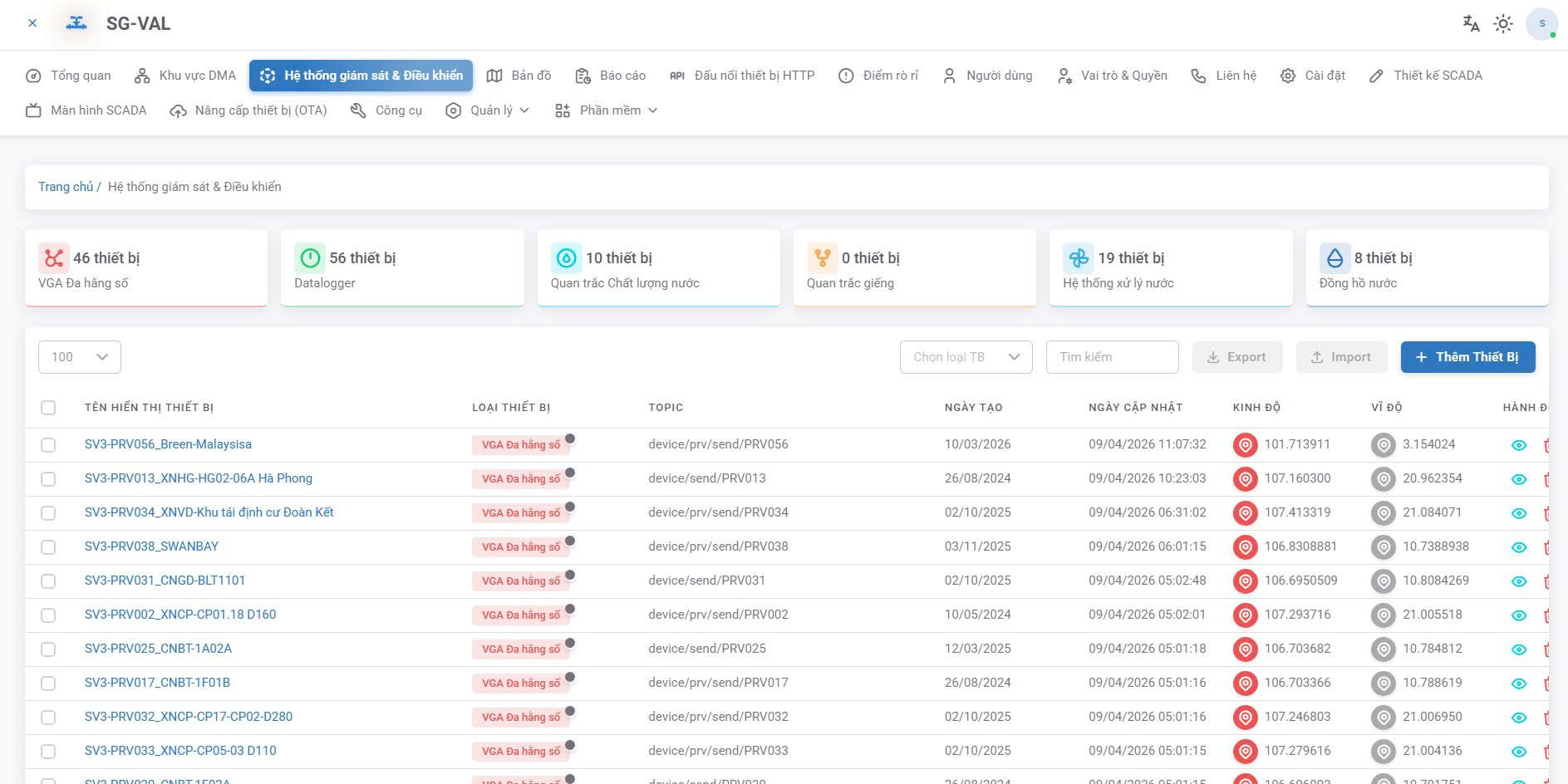
IoT Software Platform Designed and Developed by Sai Gon Valve
The Sai Gon Valve IoT platform integrates monitoring and remote control functions into a single interface, allowing operators to supervise and manage the entire water distribution system efficiently from any location.
Improving Water Quality
Online water quality monitoring sensors continuously measure critical parameters such as pH, turbidity, residual chlorine, dissolved oxygen (DO), temperature, conductivity, and other water quality indicators.
Whenever any measured value exceeds predefined thresholds, the system automatically generates alerts, enabling operators to respond immediately and maintain compliance with water quality standards. Continuous monitoring helps ensure a safe and reliable water supply for both residential and industrial consumers.
Supporting Predictive Maintenance
Traditional maintenance programs are generally based on fixed inspection intervals, regardless of the actual operating condition of equipment.
IoT transforms maintenance into a predictive maintenance strategy by continuously collecting real-time operational data from pumps, valves, sensors, and other critical assets.
Using this information, utilities can:
Identify equipment deterioration before failures occur.
Schedule maintenance based on actual operating conditions.
Reduce unexpected downtime.
Lower maintenance and repair costs.
Extend equipment service life.
Predictive maintenance not only improves system reliability but also maximizes the return on infrastructure investment.
VI. APPLICATIONS OF IoT IN THE WATER INDUSTRY
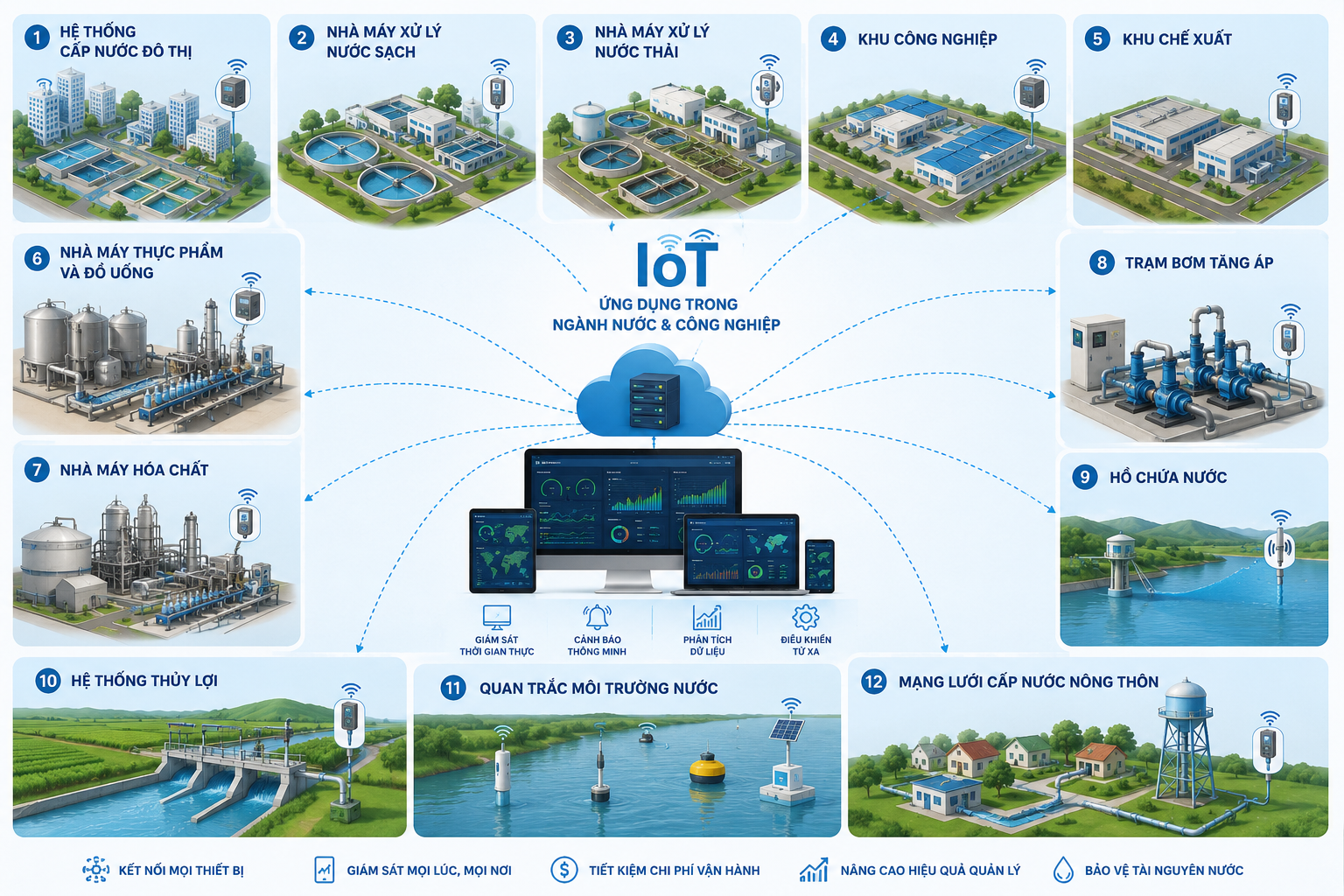
Today, IoT technologies are widely deployed across various sectors of the water industry, including:
Municipal water supply systems
Drinking water treatment plants
Wastewater treatment plants
Industrial parks
Export processing zones
Food and beverage manufacturing facilities
Chemical processing plants
Booster pumping stations
Water reservoirs
Irrigation systems
Water quality monitoring networks
Rural water supply systems
In addition to these applications, IoT is increasingly adopted in Smart City, Smart Factory, and Industrial Automation projects, where real-time monitoring and intelligent control are essential for efficient infrastructure management.
VII. FUTURE TRENDS OF IoT IN THE WATER INDUSTRY
The future of IoT extends far beyond simple remote monitoring. Next-generation Smart Water systems will integrate IoT with several advanced digital technologies, including:
Artificial Intelligence (AI)
Machine Learning (ML)
Digital Twin Technology
Cloud Computing
Big Data Analytics
Geographic Information Systems (GIS)
Blockchain for Secure Data Management
The integration of these technologies will enable water utilities to move toward fully intelligent, autonomous water management systems capable of optimizing resources, improving operational efficiency, reducing environmental impacts, and supporting long-term sustainability.
As digital transformation continues to accelerate, data-driven decision-making will become the foundation of modern water utility operations.
VIII. CONCLUSION
The Internet of Things (IoT) is transforming the water industry by connecting infrastructure, devices, and operational data into a single intelligent ecosystem. From real-time monitoring of flow, pressure, and water quality to remote control of valves and pumping stations, IoT empowers organizations to reduce water losses, optimize operational efficiency, improve asset reliability, and accelerate digital transformation.
For water utilities, industrial facilities, municipalities, and manufacturing enterprises, investing in IoT is no longer simply a technology upgrade—it is a strategic initiative that enhances operational resilience, supports sustainable resource management, and lays the foundation for next-generation Smart Water systems.
With continuous advancements in artificial intelligence, cloud computing, and industrial automation, IoT will continue to play a pivotal role in shaping the future of water management, enabling organizations to deliver safer, smarter, and more sustainable water services for generations to come.
RELATED ARTICLES
WATER INDUSTRY HUMAN RESOURCE MUST MOVE WITH TECHNOLOGY
STRUCTURE, KEY BENEFITS, AND COMPARISON OF SMART MULTI-SETPOINT PRESSURE REDUCING VALVES